
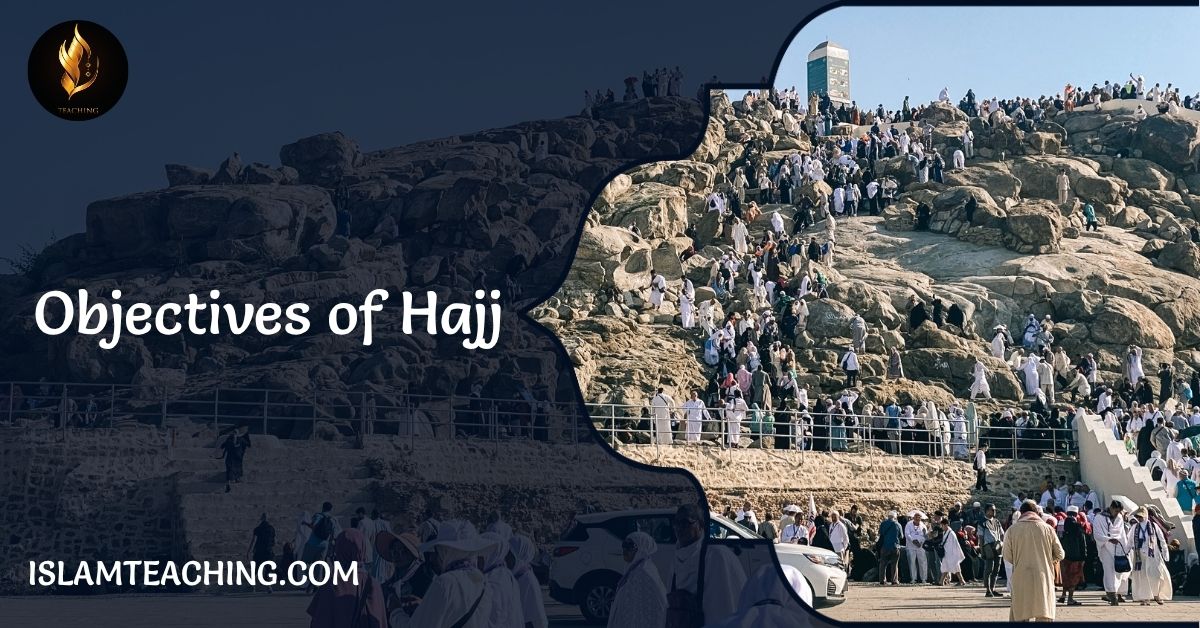
Objectives of Hajj
Allah Almighty created mankind for His worship and prescribed various forms of worship so that a servant may remain connected to his Lord in every circumstance. Among these great acts of worship is Hajj, one of the pillars of Islam, through which a believer presents himself before the court of his Lord. In the Noble Qur’an, Allah Almighty has clearly explained the obligation and significance of Hajj. Allah says:
وَلِلَّهِ عَلَى النَّاسِ حِجُّ الْبَيْتِ مَنِ اسْتَطَاعَ إِلَيْهِ سَبِيلًا ۖ وَمَنْ كَفَرَ فَإِنَّ اللَّهَ غَنِيٌّ عَنِ الْعَلَمِينَ
And Hajj to the House is a duty owed to Allah by people who are able to find a way to it. And whoever disbelieves, then indeed Allah is free of need from all the worlds. (3:97)
Likewise, Allah Almighty commanded Prophet Ibrahim (عَلَيْهِ السَّلَامُ) to call people to Hajj.
Allah says:
وَاذْنُ فِي النَّاسِ بِالْحَجِّ يَأْتُوكَ رِجَالًا وَ عَلَى كُلِّ ضَامِرٍ يَأْتِينَ مِنْ كُلِّ فَجٍّ عَمِيقٍ
And proclaim the pilgrimage among mankind. They will come to you on foot and on every lean camel, coming from every distant pass. (22:27)
This is the divine call that was made centuries ago, yet even today the cries of “Labbaik” continue to echo from every corner of the world with the same spirit and devotion. Hajj is not merely a collection of outward rituals; rather, it is a state of the heart, sincerity, and a renewal of one’s relationship with Allah. Hajj is also one of the essential pillars of Islam. Abdullah ibn Umar (رَضِيَ اللَّهُ عَنْهُ) narrated that the Messenger of Allah ﷺ said:
بُنِيَ فِي الإِسْلامُ عَلَى خَمْسٍ: شَهَادَةِ أَنْ لاَ إِلَهَ إِلَّا اللَّهُ وَأَنَّ مُحَمَّدًا رَسُولُ اللَّهِ، وَإِقَامِ الصَّلاةِ، وَإِيتَاءِ الزَّكَاةِ، وَالْحَقِّ، وَصَوْمِ رَمَضَانَ
Islam is built upon five pillars: bearing witness that there is no deity worthy of worship except Allah and that Muhammad is the Messenger of Allah, establishing prayer, paying Zakah, performing Hajj, and fasting Ramadan. (Sahih Muslim)
Abu Hurairah (may Allah be pleased with him) narrated:
أَنَّ رَسُولَ اللَّهِ صَلَّى اللَّهُ عَلَيْهِ وَسَلَّمَ سُئِلَ ، أَيُّ الْعَمَلِ أَفْضَلُ؟ فَقَالَ: إِيمَانُ بِاللَّهِ وَرَسُولِهِ قِيلَ : ثُمَّ مَاذَا ؟ قَالَ : الْجِهَادُ فِي سَبِيلِ اللَّهِ ، قِيلَ : ثُمَّ مَاذَا؟ قَالَ : حَجٌ مَبْرُورٌ
The Messenger of Allah ﷺ was asked, “Which deed is the most virtuous?” He replied, “Faith in Allah and His Messenger.” It was asked, “Then what?” He replied, “Striving in the path of Allah.” It was asked again, “Then what?” He replied, “An accepted Hajj.” (Sahih al-Bukhari)
If Allah has granted a person the means and good health, he should hasten to perform Hajj. Abdullah ibn Abbas (رَضِيَ اللَّهُ عَنْهُ) narrated that the Messenger of Allah ﷺ said:
تَعَجَّلُوا إِلى الحَجِ ، فَإِنْ أَحَدَكُمْ لَا يَدْرِي مَا يَعْرِضُ لَهُ
Hasten to perform Hajj, for none of you knows what may happen to him. (Musnad Ahmad)
Abdullah ibn Abbas (may Allah be pleased with him) also narrated that the Messenger of Allah ﷺ said:
مَنْ أَرَادَ الْحَجَّ فَلْيَتَعَجَّلْ، فَإِنَّهُ قَدْ يَمْرَضُ الْمَرِيضُ، وَتَضِلُّ الضَّالَةُ، وَتَعْرِضُ الْحَاجَةُ
Whoever intends to perform Hajj should hasten to do so, for he may fall ill, lose his means of transportation, or encounter some obstacle. (Ibn Majah)
Hajj is the act of worship in which Muslims from all over the world gather at one center, dressed alike, proclaiming one call, and bowing before one Lord. This gathering is not merely an act of worship; it is a living manifestation of the reality that the servants of Allah rise above differences of race, color, language, and nationality to become one Ummah. It is a sacred journey in which a believer leaves behind his home, business, comfort, and desires to travel toward the House of Allah. It is an act of worship that combines physical effort, financial sacrifice, and spiritual devotion.
Objectives of This Great Act of Worship
1. A Practical Declaration of Tawheed and Rejection of Shirk
Hajj is not merely a ritual; it is a living and practical declaration of Tawheed before Allah. Through his tongue, actions, and heart, the pilgrim testifies that Allah alone deserves worship and has no partner. It is a sacred journey in which a person abandons all false supports and becomes devoted solely to Allah, openly declaring complete disassociation from all forms of shirk. The cries of Labbaik echo the message that worship, love, fear, hope, and submission belong exclusively to Allah. This is the essence of Hajj and its foremost objective. Jabir (رَضِيَ اللَّهُ عَنْهُ), while describing the Farewell Pilgrimage, narrated that the Messenger of Allah ﷺ proclaimed the Talbiyah of Tawheed:
لَبَّيْكَ اللَّهمَّ لَبَّيْكَ، لَبَّيْكَ لَا شَرِيكَ لَكَ لَبَّيْكَ، إِنَّ الْحَمْدَ وَالنِّعْمَةَ لَكَ وَالْمُلْكَ لا شَرِيكَ لَكَ
Here I am, O Allah, here I am. Here I am, You have no partner, here I am. Indeed, all praise, blessings, and sovereignty belong to You. You have no partner. (Sunan-Nasai)
This Talbiyah is a direct rejection of shirk.
The virtue of reciting the Talbiyah is immense. Sahl ibn Sa’d (رَضِيَ اللَّهُ عَنْهُ) reported that the Messenger of Allah ﷺ said:
مَا مِنْ مُسْلِمٍ يُلَبِّي إِلَّا لَبِّي مَنْ عَنْ يَمِينِهِ، أَوْ عَنْ شِمَالِهِ مِنْ حَجَرٍ أَوْ شَجَرٍ أَوْ مَدَرٍ حَتَّى تَنْقَطِعَ الْأَرْضُ مِنْ هَاهُنَا وَهَاهُنَا
Whenever a Muslim recites the Talbiyah, everything on his right and left—stones, trees, and clods of earth—joins him in reciting it, until the ends of the earth on both sides. (Tirmidhi)
Abu Hurairah (رَضِيَ اللَّهُ عَنْهُ) narrated that the Messenger of Allah ﷺ said:
ما أَهَلَّ مُهِلَّ قَطُّ إِلَّا بُشِّرَ ، ولا كَبَّرَ مُكَبِّرُ قَطُّ إِلَّا بُشِّرَ ، قيل : بالجنةِ؟ قَالَ : نَعَمُ
No one recites the Talbiyah except that he is given glad tidings, and no one proclaims the Takbeer except that he is given glad tidings.” It was asked, “Glad tidings of Paradise?” He replied, “Yes.” (Silsilah al-Sahihah)
The Day of Arafah is the greatest day of Hajj, and it is also the day on which the declaration of Tawheed reaches its highest expression.
2. Remembrance of Allah (Dhikr)
Hajj is not merely a collection of outward rituals; rather, it is a magnificent opportunity for a believer to fill his heart and tongue with the remembrance of Allah. During this blessed journey, a person distances himself from worldly distractions and immerses himself in the remembrance of his Lord. Every step, movement, and moment becomes connected to the remembrance of Allah, and the pilgrim practically demonstrates that the true purpose and tranquility of life lie in remembering Allah. Allah Almighty clearly mentions one of the objectives of Hajj in the Qur’an:
وَاذْنُ فِي النَّاسِ بِالْحَجِّ يَأْتُوكَ رِجَالًا وَ عَلَى كُلِّ ضَامِرٍ يَأْتِينَ مِنْ كُلِّ فَجٍّ عَمِيقٍ لِيَشْهَدُوا مَنَافِعَ لَهُمْ وَيَذْكُرُوا اسْمَ اللهِ فِي أَيَّامٍ مَّعْلُومَةٍ عَلَى مَا رَزَقَهُمْ مِنْ بَهِيمَةِ الْأَنْعَامِ فَكُلُوا مِنْهَا وَأَطْعِمُوا الْبَائِسَ الْفَقِيرَ
And proclaim the pilgrimage among mankind. They will come to you on foot and on every lean camel, coming from every distant pass, so that they may witness benefits for themselves and mention the name of Allah during the appointed days over the livestock He has provided for them. So eat from them and feed the poor and needy. (22:27–28)
This verse explicitly identifies the remembrance of Allah as one of the fundamental objectives of Hajj.
Allah also says:
لَيْسَ عَلَيْكُمْ جُنَاحٌ أَنْ تَبْتَغُوا فَضْلًا مِّنْ رَّبِّكُمْ فَإِذَا أَفَضْتُمْ مِنْ عَرَفَاتٍ فَاذْكُرُوا اللَّهَ عِنْدَ الْمَشْعَرِ الْحَرَامِ وَاذْكُرُوهُ كَمَا هَدَاكُمْ وَإِنْ كُنْتُمْ مِنْ قَبْلِهِ لَمِنَ الضَّالِّينَ
There is no sin upon you if you seek the bounty of your Lord. Then when you depart from ‘Arafat, remember Allah at Al-Mash‘ar Al-Haram, and remember Him as He has guided you, although before that you were surely among those who were astray. (2:198)
And Allah says:
فَإِذَا قَضَيْتُمْ مَنَاسِكَكُمْ فَاذْكُرُوا اللهَ كَذِكْرِكُمْ آبَاءَكُمْ أَوْ أَشَدَّ ذِكْرًا
Then when you have completed your rites, remember Allah as you remember your forefathers, or with even greater remembrance. (2:200)
These verses make it clear that one of the major objectives of Hajj is the abundant remembrance of Allah.
3. Attaining Taqwa (God-Consciousness)
One of the greatest objectives of Hajj is to develop Taqwa within the hearts of believers, enabling them to purify not only their outward actions but also their inner selves for the sake of Allah. Hajj constantly reminds a person that he is under the watchful care of his Lord, that every word and action will be accounted for, and that true honor and acceptance are based upon Taqwa. When a pilgrim restrains his desires, observes the limits set by Allah, and prioritizes Allah’s pleasure in every circumstance, he develops a level of God-consciousness that transforms his entire life.
Allah says:
وَ تَزَوَّدُوا فَإِنَّ خَيْرَ الزَّادِ التَّقْوَى
And take provisions, but indeed the best provision is Taqwa. (2:197)
Not only Hajj, but all acts of worship are ultimately intended to cultivate Taqwa.
Regarding sacrifice, Allah says:
لَنْ يَنَالَ اللَّهَ لُحُومُهَا وَلَا دِمَاؤُهَا وَلَكِنْ يَنَالُهُ التَّقْوَى مِنْكُمْ
Neither their meat nor their blood reaches Allah, but what reaches Him is your Taqwa. (22:37)
Thus, the ultimate purpose and essence of all acts of worship is the attainment of Taqwa.
4. Forgiveness of Sins and Spiritual Purification
Another objective of Hajj is to cleanse a believer from the stains of sin and grant him spiritual purity so that he may return to his Lord with a renewed and purified heart. This blessed journey encourages sincere repentance, humility, and devotion. A pilgrim reflects upon his past shortcomings, seeks Allah’s mercy, and returns with a fresh beginning.
Abu Hurairah (رَضِيَ اللَّهُ عَنْهُ) narrated that the Messenger of Allah ﷺ said:
مَنْ حَجَّ لِلَّهِ فَلَمْ يَرْفُتْ وَلَمْ يَفْسُقُ رَجَعَ كَيَوْمٍ وَلَدَتْهُ أُمُّهُ
Whoever performs Hajj solely for the sake of Allah and avoids indecent speech and sinful conduct will return as free from sin as the day his mother gave birth to him. (Sahih al-Bukhari)
Abu Hurairah (رَضِيَ اللَّهُ عَنْهُ) also narrated that the Messenger of Allah ﷺ said:
الْعُمْرَةُ إِلَى الْعُمْرَةِ كَفَّارَةٌ لِمَا بَيْنَهُمَا وَالْحَجُّ الْمَبْرُورُ لَيْسَ لَهُ جَزَاءُ إِلَّا الْجَنَّةُ
One ‘Umrah to another is an expiation for the sins committed between them, and an accepted Hajj has no reward except Paradise. (Sahih al-Bukhari)
5. Training in Obedience and Submission
One of the major objectives of Hajj is to develop complete obedience and submission to Allah. A believer learns to surrender to every command of his Lord, whether or not he fully comprehends its wisdom. Hajj teaches a person to rise above his personal opinions, desires, and habits, and to follow Allah’s commands wholeheartedly.
From wearing Ihram to performing Tawaf, Sa’i, standing at Arafah, staying in Muzdalifah, and stoning the Jamarat, every act of Hajj serves as practical training in obedience. Through these actions, the pilgrim learns to say with sincerity: “We hear and we obey.”
Allah Almighty describes the true believers by saying:
إِنَّمَا كَانَ قَوْلَ الْمُؤْمِنِينَ إِذَا دُعُوا إِلَى اللهِ وَ رَسُولِهِ لِيَحْكُمَ بَيْنَهُمْ أَنْ يَقُولُوا سَمِعْنَا وَ أَطَعْنَا وَ أُولَئِكَ هُمُ الْمُفْلِحُونَ وَ مَنْ يُطِعِ اللَّهَ وَرَسُولَهُ وَيَخْشَ اللَّهَ وَ يَتَّقْهِ فَأُولَئِكَ هُمُ الْفَائِزُونَ
The only response of the believers, when they are called to Allah and His Messenger so that he may judge between them, is that they say, ‘We hear and we obey.’ And it is those who are successful. And whoever obeys Allah and His Messenger, fears Allah, and remains conscious of Him, then they are the successful ones. (24:51–52)
Hajj gives practical expression to this attitude, where every step declares: “O Allah, I am fully obedient to Your command.”
Many rituals of Hajj may not appear rationally obvious, yet they are profound tests of obedience. Stoning the devil, performing rituals in a prescribed order, and staying at specific locations all teach a believer to submit his intellect to divine revelation.
Kissing or touching the Black Stone is done solely in obedience to the Sunnah of the Prophet ﷺ, not because the stone itself possesses any independent power. Umar ibn Al-Khattab (رَضِيَ اللَّهُ عَنْهُ) said while kissing the Black Stone:
إِنِّي أَعْلَمُ أَنَّكَ حَجَرٌ لَا تَضُرُّ وَلَا تَنْفَعُ وَلَوْلَا أَنِّي رَأَيْتُ النَّبِيَّ صَلَّى اللَّهُ عَلَيْهِ وَسَلَّمَ يُقَبِّلُكَ مَا قَبَّلْتُكَ
I know that you are only a stone; you can neither benefit nor harm. Had I not seen the Prophet ﷺ kissing you, I would not have kissed you. (Sahih al-Bukhari)
This is the level of obedience where a believer leaves aside his personal opinion and follows the Sunnah. Likewise, the restrictions of Ihram serve as practical training in self-discipline and submission. A person willingly abandons many lawful comforts solely because Allah has commanded it, thereby learning to sacrifice personal desires for the sake of obedience to Allah.
اردو مضمون · IslamTeachingحج کے مقاصدحج کے مقاصد کیا ہیں؟ اس مضمون میں حج کی روحانی، اخلاقی، سماجی اور تعلیمی اہمیت کے ساتھ اس کے بنیادی مقاصد کو قرآن و سنت کی روشنی…پیش نظارہ دیکھیں ←
