The Conquest of Makkah (Ramadan 8 AH)
After the treaty of Hudaybiyyah came to an end, the Messenger of Allah (ﷺ) began preparing for battle with great speed, and he made every effort to ensure that this news would not reach the people of Makkah.
The Noble Prophet (ﷺ) intended to arrive suddenly upon the people of Makkah so that they would not be able to resist, and thus the sacred land of Makkah could be returned to its rightful people without bloodshed. He (ﷺ) made special supplications in this regard and said: “O Allah, let not any person from Quraysh become aware, and allow us to reach them suddenly.”
When the preparations for the journey were complete, he then informed the Companions (رضي الله عنهم) about the direction they were heading toward.
March Toward Makkah
At last, the Noble Prophet (ﷺ) set out from Madinah in Ramadan of 8 AH with a عظیم army of ten thousand devoted companions. The journey took place during intense heat, and the pace of travel was kept swift. Since a traveler is granted a concession not to fast, the Messenger of Allah (ﷺ) instructed the Companions (رضي الله عنهم) not to fast, saying: “Remain strong against your enemy.” However, the Noble Prophet (ﷺ) himself chose the more difficult path and continued fasting.
When they camped at the place called Al-‘Araj, the Prophet (ﷺ), due to intense thirst, poured water over his head. Seeing his hardship, some Companions suggested that he should break his fast. They said: “O Messenger of Allah! Since you are fasting, some people are also fasting.”
The Prophet (ﷺ) continued fasting, but when Makkah was about 90 kilometers away, he camped at the grove of Kuray‘ (Kadeed). There, in front of everyone, he called for a bowl of water and drank it. Upon seeing this, all the people broke their fast.
Meeting with Abbas (رضي الله عنه)
The movement of the army was so silent and swift that Quraysh remained unaware until the very end. The Muslims covered a two-week journey in just one week. The Prophet’s (ﷺ) uncle, Abbas (رضي الله عنه), was unaware of the departure and had set out with his family intending to migrate. At a place called Nakhlah, about 82 miles from Makkah, he saw the عظیم Muslim army approaching and was astonished. The Prophet (ﷺ) was very pleased to see him and included him among his companions.
Abu Sufyan ibn al-Harith Accepts Islam
The Prophet (ﷺ) camped near Makkah at Marr al-Zahran. Only then did Quraysh realize the situation, and they were struck with panic upon seeing such a large force at their doorstep.
At this point, a remarkable event occurred: two prominent individuals from Quraysh accepted Islam—both named Abu Sufyan. One was Abu Sufyan ibn Harb, and the other was Abu Sufyan ibn al-Harith.
Abu Sufyan ibn al-Harith was a distinguished member of Banu Hashim and a cousin of the Prophet (ﷺ). He had been a close companion during childhood and youth and was also a skilled poet. However, he had previously hurt the Prophet (ﷺ) and Muslims deeply by composing offensive poetry against him. Now, however, the truth of Islam had taken root in his heart. He felt deep remorse for his past, to the extent that he became overwhelmed with regret. Taking his young son with him, he came to the Prophet’s camp.
When the Prophet (ﷺ) was informed of his arrival, past wounds came to mind, and he initially said that he did not wish to meet him. When Abu Sufyan heard this, he said with great anguish: “By Allah! If the Messenger of Allah (ﷺ) does not grant me permission to meet him, I will take my young child and wander into the desert until we die of hunger and thirst.”
When this was conveyed to the Prophet (ﷺ), he was deeply moved. He called him in, and Abu Sufyan ibn al-Harith embraced Islam.
Acceptance of Islam by Abu Sufyan ibn Harb
Meanwhile, Abu Sufyan ibn Harb—one of the bravest and most prominent leaders of Quraysh—set out with two companions to assess the Muslim army. By the command of the Prophet (ﷺ), the المسلمين had lit fires in front of their tents. From a distance, the people of Makkah saw hundreds of flames shining and were overwhelmed with awe. Upon seeing this scene, Abu Sufyan ibn Harb spontaneously exclaimed: “I have never seen such an army and such lights in my entire life.” His loud voice echoed through the silence of the night.
Hazrat Abbas (رضي الله عنه) recognized his voice in the darkness and said: “O servant of Allah! The Messenger of Allah (ﷺ) has arrived with ten thousand Muslims. Today you do not have the strength to face them.”
Abu Sufyan asked: “Is there any way to save myself?”
Hazrat Abbas (رضي الله عنه) realized that if any Muslim were to recognize Abu Sufyan, his survival would be difficult. Therefore, he immediately seated him on his mule and hurried through different sections of the army, taking him directly to the presence of the Messenger of Allah (ﷺ).
Hazrat Umar al-Faruq (رضي الله عنه) also came running behind and sought permission to strike down the leader of the enemies. However, the Noble Prophet (ﷺ), who even wished well for his enemies, dealt with Abu Sufyan with mercy and wisdom.
The Noble Prophet (ﷺ), inviting him to Islam, said:
“O Abu Sufyan! Has the time not yet come for you to testify that there is no deity except Allah?”
Seeing this noble treatment, Abu Sufyan was deeply moved and said:
“May my father and mother be sacrificed for you! How kind, how generous, and how noble you are. By Allah! I have come to realize that if there were any deity besides Allah, it would have helped me today.”
Thus, Abu Sufyan understood the concept of Tawhid. The Prophet (ﷺ) then wished that he should verbally declare the testimony of faith, affirming both Tawhid and Risalah. So he said:
“And has the time not yet come for you to acknowledge that I am the Messenger of Allah?”
Abu Sufyan replied:
“There is no doubt that you are kind and generous, but regarding this matter, I still feel some hesitation.”
Hazrat Abbas (رضي الله عنه), who was present, understood that the truth had become clear to Abu Sufyan, but a sense of pride was holding him back. So he said:
“O servant of Allah! Accept Islam before your neck is struck off.”
This proved effective. Abu Sufyan cast aside his doubts and accepted Islam.
The Noble Prophet (ﷺ) then announced:
“Whoever enters the house of Abu Sufyan is safe. Whoever takes refuge in the Sacred Mosque is safe. And whoever closes the door of his house is also safe.”
The Prophet (ﷺ), the Mercy to the worlds, made this declaration so that the people of Makkah would not feel threatened and resort to fighting, as fear sometimes pushes people into conflict. By providing these assurances of safety, he ensured that the Muslims could enter Makkah without resistance and that the sacred land would remain free from bloodshed.
The View of the Muslim Army
When the Muslim army prepared to enter Makkah, the Prophet (ﷺ) instructed Hazrat Abbas (رضي الله عنه) to take Abu Sufyan ibn Harb and stand at a narrow mountain pass so he could observe the army.
After a short while, different units of the Muslim army began passing by, each carrying the banners of their respective tribes.
Abu Sufyan would ask about each group:
“Whose group is this?”
Hazrat Abbas would name the tribe, and Abu Sufyan would respond dismissively:
“What concern are they?”
Finally, the Messenger of Allah (ﷺ) passed by with the armored ranks of the Muhajirin and Ansar. When Hazrat Abbas informed him, Abu Sufyan said:
“Who can stand against them? O Abbas! Your nephew has become a great king.”
Hazrat Abbas (رضي الله عنه) replied:
“O servant of Allah! This is not kingship; this is Prophethood.”
However, Safwan bin Umayyah and some others attempted to resist the group entering Makkah under the command of Hazrat Khalid bin Walid (رضي الله عنه). Hazrat Khalid responded, and a few people were killed while the rest fled.
Apart from this brief clash, no other disturbance to peace occurred, and the conquest remained largely bloodless.
Triumphant Entry into Makkah
When the Noble Prophet (ﷺ) entered Makkah, every scene of the past came before his eyes. This was the very land where he was born, raised, and spent his youth with honor and respect. Then, when he was granted Prophethood, he stood up to fulfill this responsibility and faced the hostility of the entire city. He remembered every ظلم and hardship inflicted by Quraysh—so much so that he and his followers were forced into exile.
Now, that very city stood humbled before him. Yet, despite such a عظیم victory, he did not display pride or arrogance like worldly conquerors. Instead, he was the embodiment of humility before Allah. Out of gratitude, his blessed head would lower so much that it nearly touched the saddle of his mount.
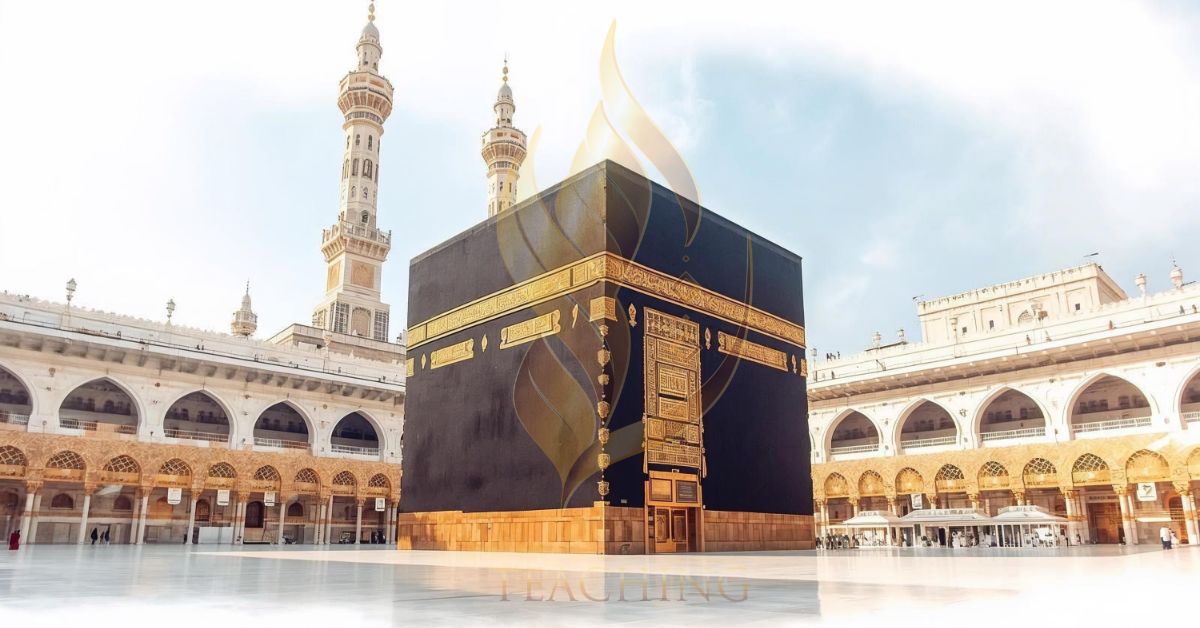
The Mercy to the worlds (ﷺ) entered the Sacred Mosque and performed Tawaf while riding his mount. In his blessed hand was a stick. During Tawaf, he pointed toward the idols placed in the courtyard of the Ka‘bah with his stick, and they began to fall one by one.
At that moment, the following verse was upon his blessed tongue:
وَقُلْ جَآءَ ٱلْحَقُّ وَزَهَقَ ٱلْبَـٰطِلُ ۚ إِنَّ ٱلْبَـٰطِلَ كَانَ زَهُوقًۭا ٨١
And say, “Truth has come and falsehood has vanished. Falsehood is surely bound to vanish.” (17:81)
After this, the Noble Prophet (ﷺ) took the keys of the Ka‘bah from its keeper, ‘Uthman bin Talhah (رضي الله عنه), and had the door of the Ka‘bah opened. Inside, there were images made by the polytheists depicting Prophet Ibrahim (عليه السلام) and angels on the walls. By his command, the Companions removed these images, and the Prophet (ﷺ) then offered prayer inside the Ka‘bah.
Address at the Door of the Ka‘bah
Standing at the door, he addressed the leaders of Quraysh:
“There is no deity except Allah, alone, without any partner. He has fulfilled His promise, helped His servant, and alone defeated all the armies. Today, all pride and bloodshed of the days of ignorance are beneath my feet. O people of Quraysh! Allah has removed from you the arrogance and pride of ignorance. All people are the children of Adam, and Adam was created from dust.”
After this brief sermon, he asked the leaders of Quraysh:
“Tell me, what do you think I will do with you today?”
The leaders of Quraysh remembered their crimes but still hoped for mercy. They replied humbly:
“Treat us kindly. You are a noble brother and the son of a noble brother.”
The Mercy to the worlds (ﷺ) responded with great generosity:
“Go, for you are all free.”
Seeing his extraordinary forgiveness and generosity, it was not long before most of them embraced Islam.
The Ka‘bah Purified from Idols
The House of Allah was now purified from all symbols of shirk, and its honor as the center of Tawhid was restored. The major leaders of Quraysh—who had once been at the forefront of opposing Islam—began coming one after another to accept Islam.
Now, the Prophet (ﷺ) had also become the leader of the people of Makkah. At that time, it would not have been surprising if it were thought that he would now reside in Makkah and make it the center of the Islamic state. Some of the Ansar were thinking along these lines, as they feared that he might remain in Makkah.
The Noble Prophet (ﷺ) was engaged in supplication on Mount Safa, while the Ansar kept their eyes fixed on him, waiting to see what decision he would make regarding this matter. Through revelation, the Prophet (ﷺ) was informed of their concerns. After completing his supplication, he asked them:
What were you saying?
They replied:
Nothing, O Messenger of Allah!
However, when he insisted, they expressed their concerns with anxious hearts. How could the Prophet (ﷺ) discourage these devoted companions? With warmth and محبت, he said:
Allah forbid! This cannot be. My life is with you, and my death will be with you.
 اردو مضمون · IslamTeachingفتح مکه (رمضان ۸ هجری)فتح مکہ رمضان ۸ ہجری کا مکمل واقعہ، وجوہات، نبی کریم ﷺ کی حکمت عملی، بغیر جنگ کے مکہ کی فتح اور اس واقعہ سے حاصل ہونے والے…پیش نظارہ دیکھیں ←